
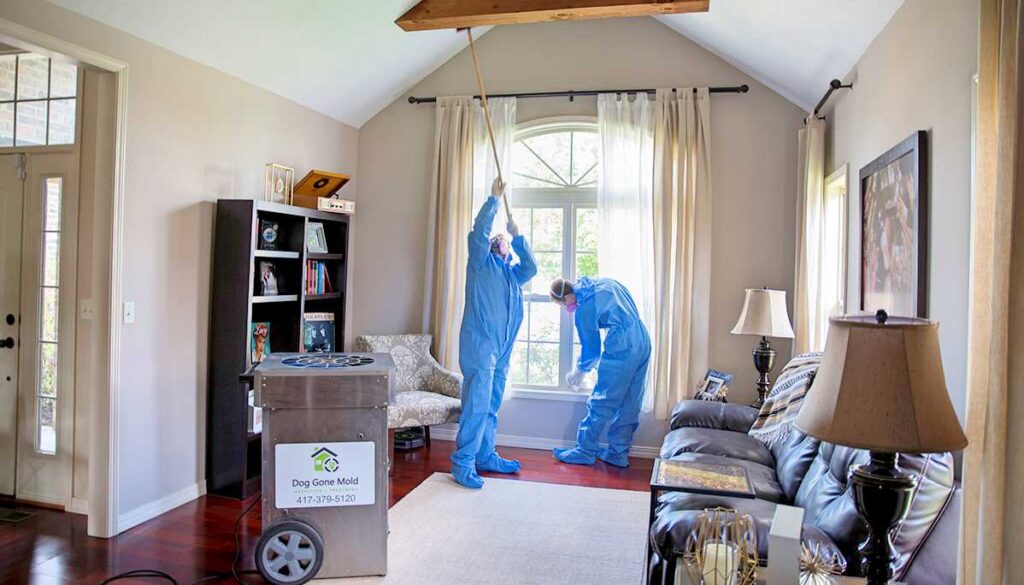
What Are All The Steps Involved With Professional Mold Remediation?
Professional mold remediation involves much more than simply spraying or wiping away the visible mold. We need to carefully identify all of the visible as well as the hidden affected areas, safely clean or remove the contaminated materials, and address any moisture problems that allowed the mold to grow in the first place.
- The affected areas are carefully evaluated so only the materials that actually need moldremediation are disturbed or removed.
- Containment helps protect the rest of the home by keeping dust, debris, and mold particles from spreading during the work.
- Materials that can’t be properly cleaned need to be removed, while unaffected materials are left in place whenever possible.
- HEPA vacuuming, detailed cleaning, and appropriate mold treatments help address the remaining surfaces within the mold remediation area.
- The original moisture source needs to be identified and corrected or the mold problems can eventually return.
- We can also investigate waterproofing and moisture intrusion issues to address both the mold and the moisture conditions that created it.
- Not every mold problem requires major demolition, and the scope of work depends on the size, location, materials involved, and source of moisture.
Let’s look at each of these main points in more detail.
What Happens During Professional Mold Remediation Inside Your Home?
Finding mold inside your home is stressful. And once you get past the stress of discovering that you have a mold problem, your first question is usually: “What happens now?”
If you’ve never dealt with professional mold remediation before, you might think that someone just shows up, sprays something on the visible mold, wipes it down, and calls it good.
But in most situations, there’s quite a bit more to it.
Every mold remediation project is different.
The location of the mold, the materials affected, the amount of growth, the source of the moisture, and the layout of your home can all affect how your problem needs to be addressed.
Let’s take a closer look at what professional mold remediation inside your home typically involves.
Determining What Actually Needs to Be Remediated
Before any work actually begins, we need to understand where the mold is located and what materials have been affected.
Sometimes mold growth is clearly visible. Other times, it can be hidden behind baseboards, drywall, cabinets, flooring, or other building materials, especially when there has been a leak, flooding, or previous water damage.
We never want to tear apart more of your home than necessary. We want to identify all of the affected areas, determine what needs to be addressed, and develop an appropriate scope of work for your specific situation.
Finding the Moisture Source Behind the Mold
Removing mold without addressing the moisture problem that caused it in the first place can leave you right back where you started.
Mold needs moisture to grow, so part of solving the problem long term is understanding where that moisture came from.
It could be a plumbing leak, roof leak, foundation water intrusion, crawl space moisture, excessive indoor humidity, condensation or drainage problems around your home.
This is why Dog Gone Mold should be your trusted mold experts.
We also own Dog Gone Waterproofing, which means we can help investigate and eliminate any moisture intrusion and waterproofing problems that may be contributing to your mold growth.
Our goal isn’t simply to remove the mold you can see today. We want to help identify and correct the moisture conditions that originally allowed it to grow so you’re less likely to face the same problems again in the future.
Containing the Work Area
One of the biggest differences between simply cleaning the visible mold and professional mold remediation is containment.
Before demolition or detailed cleaning begins, we’ll install plastic containment to separate the affected area from the rest of your home.
That matters because disturbing moldy drywall, insulation, trim, or other materials can release dust, debris, and particles into the surrounding air.
Containment helps keep the work isolated instead of allowing debris from the mold remediation area to unnecessarily spread throughout your home.
We also use professional air-filtration equipment during the mold remediation process.
Removing Materials That Can’t Reasonably Be Cleaned
Not everything with mold on it automatically needs to be thrown away.
But some porous building materials can be difficult or impractical to properly clean once they have been significantly affected.
Depending on the situation, we may need to remove drywall, insulation, baseboards, trim, carpet, padding, damaged cabinetry, or other porous materials.
This is referred to as selective demolition. We only remove what needs to come out while leaving unaffected materials and areas of the home alone whenever possible.
HEPA Vacuuming and Detailed Cleaning
Removing affected building materials is only part of the mold remediation process.
The remaining surfaces and contained work areas still need to be thoroughly cleaned.
Depending on your situation, we may use HEPA vacuuming, detailed surface cleaning, and mold remediation products appropriate for the materials and conditions involved.
This part of the process may not be as dramatic as removing drywall or insulation, but it is an important step.
Our goal isn’t simply to make the visible mold disappear. We want to properly address the affected areas and clean up the dust and debris created during mold remediation.
Treating Remaining Surfaces
After necessary demolition and cleaning are complete, remaining structural materials may be treated with products appropriate for the situation.
What is needed can vary considerably from one home to another. That’s one reason homeowners should be cautious of anyone promising that one particular spray, fog, or treatment is the answer to every mold problem.
Mold remediation is a process—not just a product.
The right approach depends on where the mold is growing, what materials are involved, how extensive the problem is, and what caused the moisture in the first place.
Cleaning Up the Work Area
Nobody wants their mold problem replaced by a construction mess.
During mold remediation, removed materials need to be properly bagged and taken out of the work area. Once the mold remediation work is complete, equipment can be removed and the contained area thoroughly cleaned before containment comes down.
Depending on the project, additional inspection or testing may also be recommended after the remediation work is complete.
What Happens After Mold Remediation?
It’s important to understand that mold remediation and reconstruction aren’t always the same thing.
For example, if affected drywall needs to be removed, the mold remediation work may be completed before drywall replacement, painting, flooring, trim work, or other reconstruction takes place.
Before work begins, we want you to understand what is included in the mold remediation scope and what, if anything, will need to happen afterward.
Just as important, the original moisture problem needs to be corrected. If a plumbing leak, foundation water intrusion, drainage problem, excessive humidity, or another source of moisture is left unresolved, mold can eventually return.
That’s why we look beyond the mold itself. Solving the moisture problem is an important part of protecting your home after remediation is complete.
Not Every Mold Problem Requires Major Remediation
Finding mold doesn’t automatically mean large portions of your home need to be torn apart.
Some mold problems are relatively small and straightforward. Others require a much more involved mold remediation process.
We’ll explain what we recommend, why we recommend it, and what work we believe is actually necessary.
If you’re comparing bids from mold remediation companies, don’t compare the estimates based solely on the price at the bottom of the page. Look closely at their scope of work.
What materials are being removed? How will the work area be contained? What cleaning will be performed? What equipment will be used? Are they looking for the source of the moisture? And what condition will the home be in when the mold remediation work is finished?
Those answers tell you much more than just their price alone.
Need Help With a Mold Problem?
Dog Gone Mold provides professional mold inspections, testing, and mold remediation services in Springfield, Missouri and surrounding communities.
Whether you’ve found visible mold, experienced water damage, noticed signs of moisture intrusion, or simply aren’t sure what you’re dealing with, we’ll help you determine what’s actually going on and explain your options.
And because mold and moisture problems often go hand in hand, we can also help investigate the underlying water or waterproofing issues that contributed to the mold problem in the first place.
Have questions about mold in your home? Contact Dog Gone Mold to schedule an inspection or discuss your situation.