
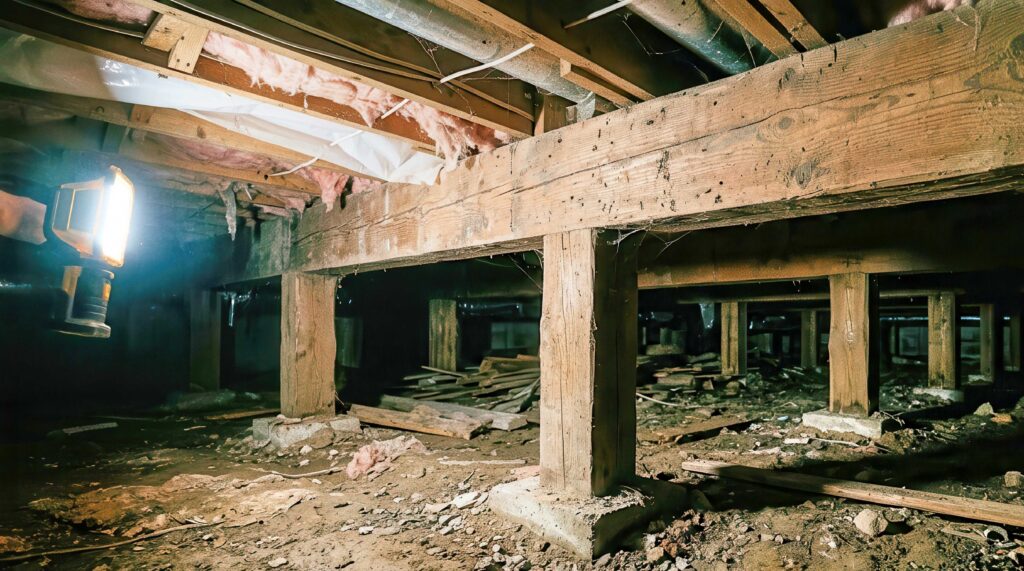
Why Do I Need To Worry About Crawl Space Mold And Not My Neighbor?
Two homes can sit right next to each other and still have completely different crawl space conditions. Differences in drainage, construction, plumbing, ventilation, previous improvements, and other moisture sources can all affect what is happening underneath your home and lead to crawl space mold.
- Water drainage around the home matters. Grading, gutters, downspouts, landscaping, driveways, and retaining walls can all influence how much water reaches the foundation and crawl space.
- No two crawl spaces are exactly alike. Differences in exposed soil, low spots, foundation vents, cracks, openings, and vapor barriers can create very different moisture conditions.
- Moisture does not always come from rain. Plumbing leaks, HVAC condensation, improperly vented exhaust, and other problems inside the home can also contribute to crawl space mold.
- Previous moisture-control work can make a major difference. A neighbor may already have a sump pump, drainage system, dehumidifier, vapor barrier, extended downspouts, or crawl space encapsulation that you cannot see from the street.
- There is no single solution for every crawl space. Some homes may need only minor improvements, while others may require mold remediation, drainage, dehumidification, a vapor barrier, or encapsulation.
- Our inspection will identify the cause before recommending the solution. The important question is not what worked for your neighbor, but why your crawl space has a moisture problem and what needs to be done to correct it.
Let’s take a closer look at each of these main points in more detail.
How Can Two Houses Next Door Be So Different?
As strange as it sounds, we’ve inspected two houses that are right next door to each other and their crawl spaces are completely different.
We’ll inspect a home with high humidity, standing water, or significant mold growth in the crawl space, while the house right next door has little to no moisture problems at all.
It may not make sense at first. Both houses get the same rain, the same hot and humid Missouri summers, and may have even been built around the same time. So why can their crawl spaces be completely different?
The simple answer is that every crawl space has its own environment, and sometimes even relatively small differences can have a big impact on crawl space mold.
It Often Starts Outside the Crawl Space
One of the first things we look at is how water moves around the home.
The ground may slope toward one house and away from the other. One home may have properly functioning gutters and extended downspouts, while the house next door is dumping roof water right beside the foundation.
Driveways, landscaping, retaining walls, and even neighboring properties can affect where water goes during a heavy rain.
We’ve seen plenty of crawl spaces where one side stays relatively dry while another side has obvious water intrusion simply because of how their property drains.
The Crawl Spaces May Look Similar, But They Aren’t Identical
Even houses with similar floor plans can have very different conditions underneath them.
One may have more exposed soil, a lower area where water collects, different foundation vents, or cracks and openings that allow water or outside air into the crawl space.
A vapor barrier can make a big difference as well. Bare soil naturally releases moisture into the crawl space. One house may have a good vapor barrier already installed, while its neighbor has bare dirt or an old barrier that only covers part of the ground.
Those differences add up and can lead to crawl space mold.
Sometimes the Moisture Isn’t Coming From Outside at All
We also don’t can’t automatically blame every crawl space moisture problem on rain or groundwater.
We regularly find plumbing leaks, condensation on HVAC ductwork, improperly vented exhaust, and other moisture sources underneath homes.
A relatively small leak that goes unnoticed can create a completely different environment than the crawl space next door.
This is why figuring out where the moisture is actually coming from is so important.
Previous Work Makes a Difference
Another thing homeowners don’t always know is what has been done to each house over the years.
Maybe a previous owner installed a sump pump or drainage system. Maybe the gutters were improved, the downspouts were extended, or a dehumidifier was installed.
One crawl space may have been partially or fully encapsulated years ago while the neighboring home has never had any moisture-control work performed.
From the street, you’d never know the difference.
There Isn’t One Crawl Space Solution for Every Home
This is probably the most important thing to consider.
Just because your neighbor needed a full crawl space encapsulation doesn’t necessarily mean that you do. On the other hand, your neighbor having a dry crawl space doesn’t mean that yours is fine.
We see everything from crawl spaces that need a few relatively simple improvements to ones that need mold remediation, drainage improvements, dehumidification, a vapor barrier, or encapsulation.
And sometimes we’ll inspect a crawl space and don’t recommend any significant work at all.
The right solution isn’t going to be the same for every home. The goal is to figure out why a particular crawl space has a moisture problem and what actually needs to be done to correct it.
After inspecting crawl spaces throughout Southwest Missouri for years, one thing is certain: two houses can sit 50 feet apart and have completely different conditions underneath them.
That’s why each crawl space needs to be evaluated on its own.
If you’re ready to make sure that your crawl space doesn’t have moisture problems or crawl space mold, give us a call for a crawl space inspection.