
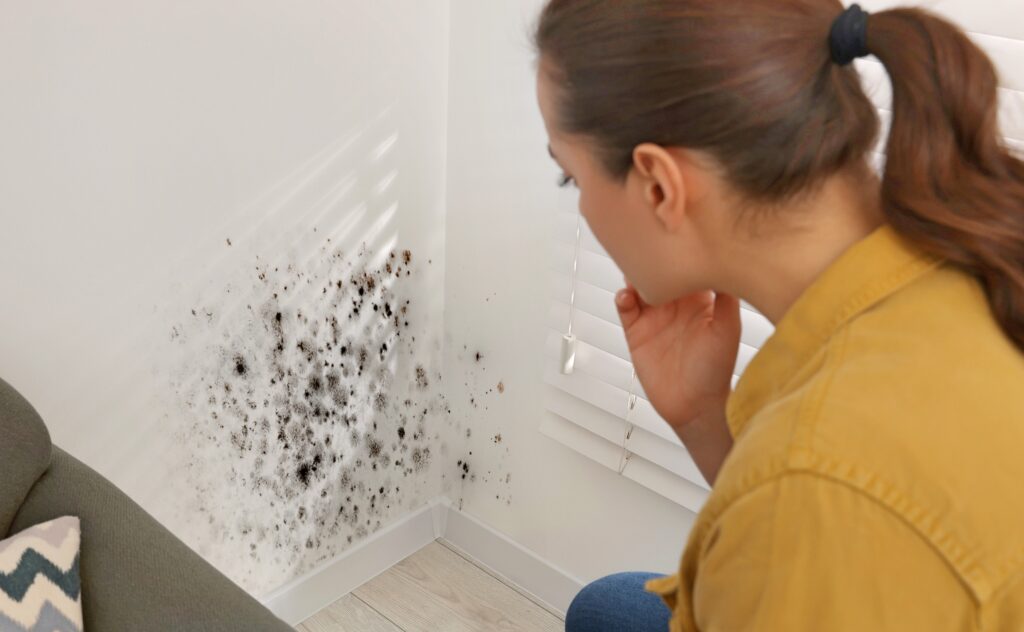
Does Mold On Your Drywall Need Mold Cleanup Or Replacement?
Discovering mold or a water stain on your drywall doesn’t necessarily mean the entire wall needs to be replaced. The best solution needs to be evaluated by a professional to determine the extent of any mold growth, the condition of the drywall, and the underlying moisture problems. At Dog Gone Mold, you can trust our experts to carefully evaluate each situation and recommend the best solution without unnecessary demolition or expense.
- Not Every Discolored Wall Has Mold: Dark spots and stains can have several causes. A professional mold inspection can determine whether mold is present and how extensive the problem may be.
- Some Moldy Drywall Can Be Cleaned and Treated: Minor surface growth may be addressed through professional cleaning and treatment when the drywall remains structurally sound and the contamination hasn’t penetrated the material.
- Damaged or Heavily Contaminated Drywall Needs Replacement: Extensive mold growth, prolonged water exposure, or contamination inside wall cavities requires removing affected materials.
- Painting Over Mold Doesn’t Solve the Problem: Paint and stain-blocking primers conceals discoloration, but they don’t remove mold or correct the underlying moisture conditions responsible for its growth.
- Finding and Fixing the Moisture Source Is Essential: Mold will return if the underlying moisture problem isn’t corrected. Dog Gone Mold and Dog Gone Waterproofing can help identify and address the moisture conditions contributing to mold growth.
- Professional Inspections Prevent Unnecessary Expenses: We’ll recommend solutions based on the actual conditions in your home, whether that means targeted mold cleanup or more extensive mold remediation.
Let’s look at each of these main points in more detail.
Does Mold Cleanup Work on Drywall or Does It Need to Be Replaced?
Discovering mold or water stains on an interior wall can be concerning for any homeowner. Whether it’s a small dark spot in a bathroom, staining around a window, or visible mold growth following a plumbing leak, one of the first questions homeowners ask is whether the affected drywall can be cleaned or if it needs to be replaced.
At Dog Gone Mold, we’ve been helping homeowners throughout Springfield, Missouri, and surrounding communities address mold problems since 2015.
One thing we’ve learned is that not every mold problem requires the same solutions. Some situations can be addressed with targeted mold cleanup and treatment, while others require removing and replacing affected materials.
The important thing is knowing the difference. That’s where having our experienced mold remediation professionals evaluate the situation can save homeowners unnecessary expenses while making sure the problem is properly addressed.
Why Is Drywall So Susceptible to Mold?
Drywall is one of the most common building materials found inside homes, but unfortunately, it can also provide favorable conditions for mold growth.
Most drywall consists of a gypsum core covered with paper facing. While the gypsum itself isn’t a significant food source for mold, the paper covering contains organic materials that mold can grow on when sufficient moisture is present.
Common causes of mold growth on drywall include plumbing leaks inside walls or beneath sinks, roof leaks, excessive indoor humidity, condensation, water intrusion around windows and doors, flooding, and poor ventilation in bathrooms and laundry rooms.
Under favorable conditions, mold can begin developing on damp building materials within 24 to 48 hours.
Unfortunately, what you see on the surface doesn’t always tell the entire story. A small discolored area might be nothing more than an old water stain, or it could indicate a larger moisture problem behind the wall.
Mold may also be growing on the back side of the drywall or inside the wall cavity, where it isn’t immediately visible.
That’s why it’s important to have a moisture and mold professional evaluate any suspicious discoloration rather than making assumptions based on what you can see.
Does Mold Cleanup Work on Drywall?
The answer depends on several factors, including the extent of the mold growth, how long the material has been exposed to moisture, and whether the contamination is limited to the surface.
In certain situations, minor surface growth on an intact, painted wall may be addressed through appropriate professional mold cleanup and treatment, particularly if the underlying drywall remains dry and undamaged.
However, drywall is a porous material. When mold penetrates the paper facing or the material has absorbed significant moisture, surface cleaning alone may not adequately resolve the problem.
Homeowners sometimes attempt to remove mold using bleach, household cleaners, or over-the-counter mold sprays. While these products may affect surface growth, they don’t necessarily remove contamination embedded in porous materials.
There’s an important distinction between killing mold and actually removing it. Even dead mold particles can contain allergens, which is why proper physical removal and cleaning are important parts of the remediation process.
Rather than experimenting with household cleaning products or attempting to determine the extent of the problem yourself, contact Dog Gone Mold for a professional evaluation.
Our experienced team can determine whether mold cleanup and treatment are appropriate or whether more extensive remediation is necessary.
When Does Moldy Drywall Need to Be Removed?
There are many more situations where removing affected drywall is the most appropriate solution.
Extensive or recurring mold growth, drywall that has become soft or swollen, prolonged water exposure, and contamination extending into insulation or wall cavities may all warrant removal. Mold that has penetrated the paper facing or spread to the back side of the drywall can also make replacement necessary.
When removal is required, affected materials should be handled using appropriate containment and remediation procedures to help prevent spreading contamination into unaffected areas of the home.
However, not every dark spot or discolored wall requires tearing out drywall.
At Dog Gone Mold, we believe in evaluating the actual conditions before recommending a course of action. We aren’t going to recommend tearing out an entire wall when a smaller, targeted solution can safely and effectively address the problem.
Unnecessary demolition increases expenses and disruption for homeowners. On the other hand, inadequate mold cleanup can leave an unresolved mold problem behind.
We treat every house like its our own and find the right balance to recommend the solution your home actually needs. Nothing more, and nothing less.
Why Painting Over Mold Isn’t a Solution
One mistake homeowners sometimes make is attempting to cover mold or suspicious discoloration with paint or stain-blocking primer.
These products may temporarily conceal visible staining, but they don’t eliminate an underlying moisture problem or properly remove mold contamination.
If moisture continues to affect the wall, mold will return, even beneath a newly painted surface.
Before repainting, it’s important to determine whether mold is present, properly address any contamination, and correct the moisture conditions responsible for the problems.
Simply covering up the evidence doesn’t make the underlying problems go away.
Finding the Moisture Source Is Just as Important as Removing the Mold
One of the most important parts of any successful mold remediation project is identifying what caused the mold to develop in the first place.
Mold needs moisture to grow. Whether that moisture comes from a leaking pipe, water intrusion through a foundation wall, condensation, or excessive humidity, removing the mold without addressing its source can allow the problem to return.
At Dog Gone Mold, we don’t want to simply remove the mold you have today. We want to help prevent you from dealing with the same problem again.
That’s one of the advantages of working with Dog Gone Mold. We also own Dog Gone Waterproofing, a company specializing in basement waterproofing, crawl space moisture control, and other water intrusion problems.
That gives us additional expertise when investigating moisture problems that may be contributing to mold growth and coming up with solutions to fix the problem.
Instead of focusing exclusively on the visible mold, we look at the bigger picture and help identify solutions to fix the underlying moisture issue.
Whether the problem requires waterproofing, humidity control, plumbing repairs, or another corrective measure, addressing the source of the moisture is essential to achieving lasting results.
Professional Interior Mold Remediation
When mold affects drywall or other interior building materials, professional mold remediation is necessary to address the problem safely and thoroughly.
Depending on the circumstances, the process may involve isolating the affected areas, using HEPA air filtration, removing contaminated materials, and thoroughly cleaning remaining surfaces.
At Dog Gone Mold, we approach every situation individually. A small area of surface growth doesn’t necessarily require the same mold remediation procedures as a wall affected by a long-term plumbing leak.
We also recognize that discovering mold in your home can be stressful. Homeowners are understandably concerned about their family’s living environment, potential damage to their home, and the cost of getting everything back to normal.
Our goal is to provide clear answers, explain what we find, and recommend an appropriate solution based on the actual conditions in your home.
Interior Mold Removal in Springfield, Missouri
If you’ve discovered mold or suspicious water stains on your drywall, don’t automatically assume the entire wall needs to be replaced. But don’t assume that wiping away a visible stain means the problem has been resolved.
The best first step when you see anything suspicious is to let our experienced professionals determine what you’re dealing with, how extensive the problems may be, and what needs to be done to correct it.
Dog Gone Mold has been serving homeowners throughout Springfield and Southwest Missouri since 2015, providing professional mold inspections, mold remediation, and moisture management solutions.
Whether you’ve noticed discoloration in a bathroom, bedroom, basement, or another interior area, our experienced team can evaluate the situation, help identify potential moisture problems, and recommend the most appropriate solution.
Contact Dog Gone Mold today to schedule a mold inspection. We’ll help you understand whether your drywall can be properly cleaned and treated or whether replacement is necessary, without recommending more work than your home actually needs.