
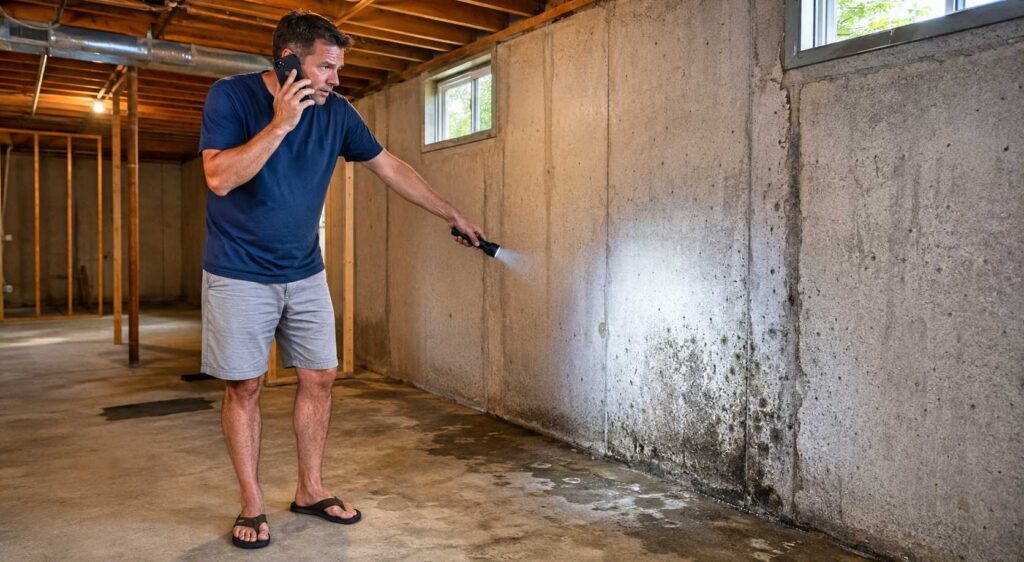
Hot Summer Weather Can Cause Mold In House in Springfield Missouri
Hot, humid Missouri summers can create the perfect conditions for mold in your house. Even when your air conditioner is running, excess moisture can still collect in crawl spaces, basements, attics, and other hidden areas and lead to mold growth.
-
- Contrary to popular belief, heat does not kill mold. Mold actually thrives when warm temperatures, moisture, and organic materials come together.
- Excess Summer humidity causes moisture problems in crawl spaces, basements, attics, utility rooms, and behind walls.
- Your air conditioner helps control humidity, but it cannot fix every moisture problem and mold in your house.
- Crawl spaces are one of the most common places where mold problems begin, especially when warm outdoor air creates condensation under the home.
- DIY mold cleanup misses the core issue, because mold in your house comes from an underlying moisture problem.
- Prevention is less expensive than waiting until mold in your house becomes a major remediation project.
- Dog Gone Mold helps identify the root source of the problem, we remove mold properly, and we provide moisture control solutions so the mold won’t come back.
Let’s take a look at each of these main points in more detail.
Summer Heat And Humidity Creates The Perfect Conditions For Mold
When the weather in the Ozarks climbs into the 90s and the humidity makes it feel closer to 100 degrees, most homeowners are focused on staying cool.
You may be running the air conditioner full blast, closing the blinds during the hottest part of the day, and trying to keep your home comfortable until the heat finally breaks.
But while you are trying to survive a Summer heat wave, all that excess heat and humidity may be finding the perfect conditions to grow mold in your house.
At Dog Gone Mold, Summer is one of our busiest times of the year. Hot, humid weather creates ideal conditions for mold growth, especially when excess moisture is present in crawl spaces, basements, attics, utility rooms, or hidden areas behind walls.
By the time homeowners notice a musty odor or visible mold, the problem could already have been developing for weeks or even months.
That’s why it’s important to take Summer moisture problems seriously. If something smells musty, feels damp, or just does not seem right, we can inspect your home, identify the source of any mold and moisture problems, and help you take the right next steps before these problems get worse.
Heat Doesn’t Kill Mold
One of the biggest misconceptions we hear from homeowners is that they assumed hot weather kills mold. But that’s not how it works.
Mold doesn’t need cool weather to grow. Mold in your house thrives when excess moisture, organic material, and warm temperatures come together.
That means hot, humid Missouri summers provide everything mold needs to spread.
Wood framing, drywall, insulation, cardboard, dust, and other common materials inside your home can all provide a food source for mold when excess moisture is present.
The real issue isn’t just the high temperatures. The bigger concern is excess moisture.
When humidity is high, condensation is forming, or water is getting into your home from a leak, drainage issue, or crawl space problem, mold can grow even when the weather outside is extremely hot.
This is why professional mold expertise matters. You might see mold on a surface, but that does not always reveal why it is has started growing.
Treating the mold without finding and addressing the excess moisture source often leads to the same mold problems coming back.
At Dog Gone Mold, we take the time to determine what created the conditions for mold in your home in the first place.
Where Summer Mold Problems Often Start
During the Summer, excess moisture finds its way into parts of your home you may not check very often. Crawl spaces, basements, attics, utility rooms, and areas around plumbing fixtures are all common trouble spots.
Mold can also develop behind walls where condensation forms or where a slow leak has gone unnoticed.
Many homeowners don’t even realize they have an excess moisture problem until they notice a musty smell, see staining on a wall or ceiling, or discover visible mold during a repair project.
In some cases, the first sign of a potential mold problem is that your home feels damp or smells stale no matter how much your air conditioner runs.
These signs should not be ignored. Musty odors are a warning that moisture and microbial growth may be present somewhere inside the home.
Even if you can’t see mold, there may still be a hidden issue in your crawl space, wall cavity, attic, or basement.
We help homeowners find the source of those warning signs. Instead of guessing where the smells are coming from or hoping it will go away on its own, our experienced mold remediation professionals will evaluate the situation and recommend a practical solution.
Your Air Conditioner Helps But It Can’t Fix Every Moisture Problem
Your HVAC system plays an important role in controlling indoor comfort during the summer. As your air conditioner cools your home, it also helps remove moisture from the air.
When everything is working properly, this helps keep indoor humidity at a healthier level.
But your air conditioner is not a cure-all for excess moisture problems. If the system is not sized correctly, has not been maintained, or is struggling to keep up with extreme heat and humidity, your indoor humidity can remain high enough for mold growth.
Outside moisture intrusion, crawl space humidity, poor drainage, plumbing leaks, and attic ventilation issues also create excess moisture problems that your HVAC system can’t solve on its own.
Your indoor humidity should stay between 30% and 50%. When humidity consistently climbs above that range, the risk of mold growth increases.
A simple humidity monitor can be one way to keep an eye on the conditions inside your home, especially during the hottest and most humid months of the year.
If you’re running your air conditioner constantly and your home still feels damp, smells musty, or has recurring humidity problems, you should call Dog Gone Mold.
We can help determine whether your issues are related to indoor humidity, crawl space moisture, water intrusion, or another hidden source that needs to be corrected.
Crawl Spaces Are A Major Source Of Summer Mold Problems
Many mold problems begin underneath your home. Crawl spaces are especially vulnerable during the summer because warm, humid outdoor air enters the crawl space and comes in contact with cooler surfaces.
When that happens, condensation can form. Over time, that excess moisture can lead to mold growth, wood rot, musty odors, and poor indoor air quality throughout the home.
The air in your crawl space doesn’t always stay in your crawl space. Air movement can carry odors, humidity, and mold-related contaminants upward into the living areas of your home.
That means excess crawl space moisture problems can affect the comfort and air quality of the entire house.
A properly encapsulated crawl space with the right moisture control and dehumidification system can dramatically reduce these risks.
Crawl space encapsulation helps separate your home from the damp ground below, control moisture intrusion, and creates a cleaner, drier environment under the house.
We provide crawl space solutions designed to address the root source of your problems, not just the symptoms.
If you have musty odors, high indoor humidity, sagging insulation, visible mold on floor joists, or moisture in your crawl space, our team can evaluate the area and explain what needs to be done to protect your home.
DIY Mold Cleanup Often Falls Short
When homeowners first discover mold, it can be tempting to grab a spray bottle, wipe the surface, and assume the problem is solved. But mold cleanup isn’t that simple.
Surface cleaning might remove what you can see, but it doesn’t address what is happening behind the wall, inside insulation, under flooring, or in the crawl space.
If you don’t correct the underlying moisture problem that allowed the mold to grow, the mold will likely return.
DIY cleanup can also disturb mold growth and spread mold particles into the air and other areas of the home. This is especially concerning when the affected area is larger than expected or when mold is growing on porous materials like drywall, wood, or insulation.
We have the experience and equipment needed to handle mold concerns more thoroughly. We won’t just to make the visible mold disappear.
We help identify the root moisture source, remove affected materials when necessary, treat the impacted area properly, and recommend solutions that reduce the chances of the problem returning.
Prevention Is Less Expensive Than Major Remediation
Waiting until you smell mold usually means the problem has already been growing for a while. The longer moisture is allowed to remain, the more damage it can cause.
What begins as a small leak, damp crawl space, or excess humidity issue can eventually lead to mold growth, damaged building materials, wood rot, and more expensive repairs.
Prevention is less expensive than waiting for a major mold problem to develop. Fixing leaks quickly, keeping gutters and downspouts working properly, monitoring indoor humidity, using a dehumidifier where needed, and paying attention to musty odors can all help reduce your risk.
Prevention doesn’t mean figuring everything out on your own. If you suspect an excess moisture problem, Dog Gone Mold can help you understand what is happening and what needs to be done.
Our professional mold inspection gives you answers before the situation becomes more serious.
Peace of mind replaces wondering whether that smell, damp spot, or crawl space moisture is something to worry about.
You’ll get a clear assessment from our local mold remediation company that deals with these types of issues every day and knows what is the best solution for your situation.
Protect Your Home By Finding The Moisture Source
The most important part of mold remediation is understanding why the mold started growing in the first place.
Mold is a symptom of an excess moisture problem. If the moisture problem isn’t corrected, the mold problems will come back.
We focus on more than just mold removal. We look for the conditions that that allowed mold to grow, whether that involves high humidity, crawl space moisture, plumbing leaks, roof leaks, condensation, poor drainage, or any other sources of water intrusion.
This approach helps you make better decisions. Instead of paying for temporary mold cleanup, we’ll address the underlying excess moisture issues and protect your home more effectively.
Whether you need mold inspection, testing, remediation, crawl space encapsulation, or moisture control, Dog Gone Mold will help you take the next step with confidence.
Call Us Before Your Problems Get Worse
If you’ve noticed a musty smell, visible mold, damp areas, high indoor humidity, or moisture in your crawl space, don’t wait and hope these problems go away on their own.
Mold problems tend to get worse when the moisture source remains, especially during our hot and humid Missouri Summers.
Our mold experts will identify the source of your problems, explain your options, and provide solutions designed to protect your home and family.
We’ll do more than just remove the mold. We’ll help you solve the moisture problems that are allowing it to grow in the first place.
If you’re concerned about mold or moisture in your home, contact Dog Gone Mold today.
The sooner you address the problem, the easier it may be to protect your home, your air quality, and your family.